
Duke Gardens is dedicated to protecting and celebrating the amazing pollinators—butterflies, bees, birds, beetles and more—that form the backbone of our natural and agricultural ecosystems, and the many plants they depend upon for survival.
Here are some resources to learn about these animals, the valuable work that they do and many challenges they face as their populations decline, as well as observe them in action and share your discoveries with others.
Pollinator Week 2025 Programs
Explore the Power of Pollinators

Bee Aware

Piedmont Prairie

Bringing the Prairie to the People

Lesser-Known Pollinators
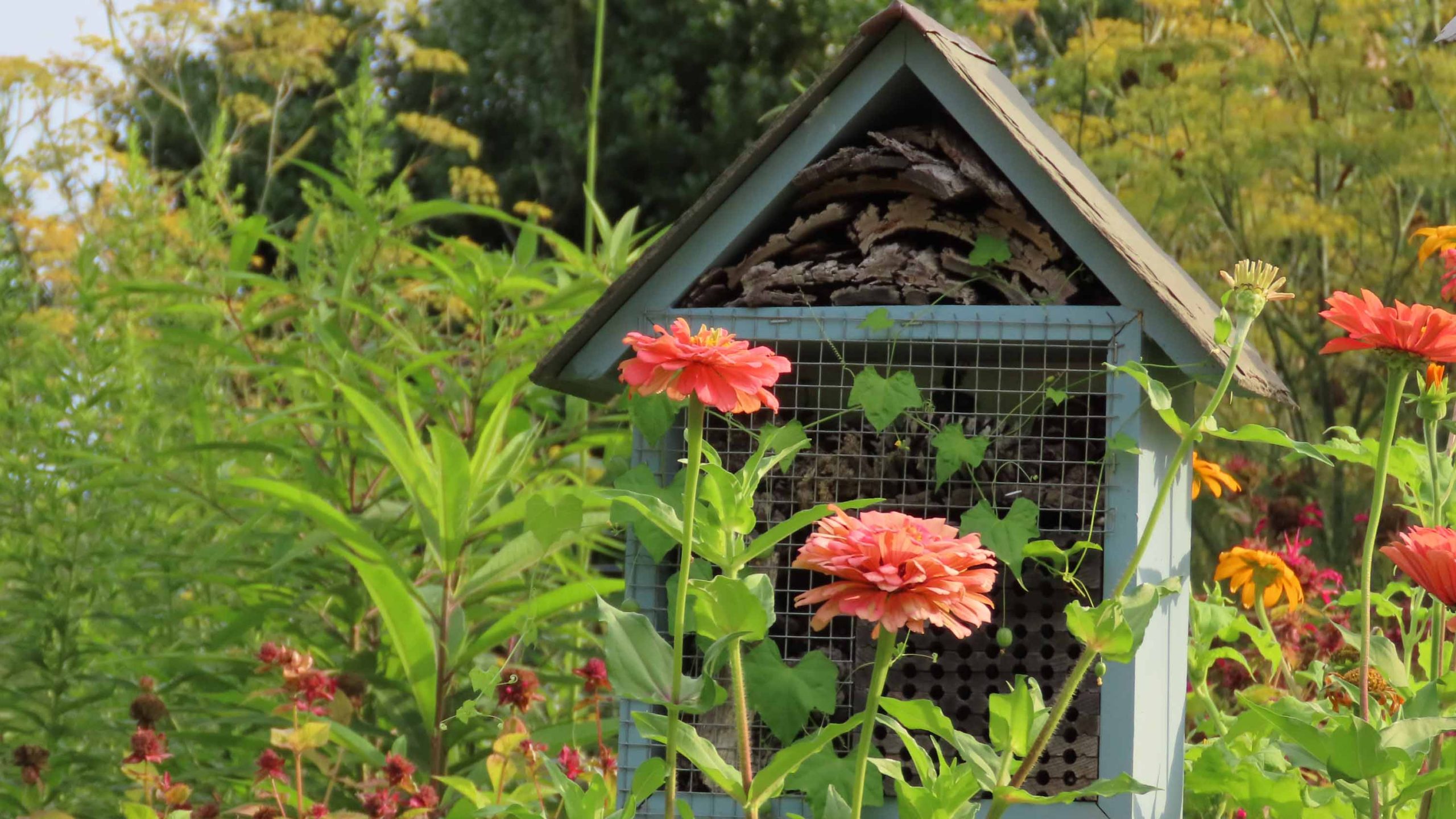
Build a Pollinator House

Pollinator Syndromes
Did you know that about 75% of all flowering plant species need the help of animals to move pollen from plant to plant for fertilization?
Discover Pollinator-friendly Plants

Beebalm

Coral Honeysuckle

Anise-Scented Sage
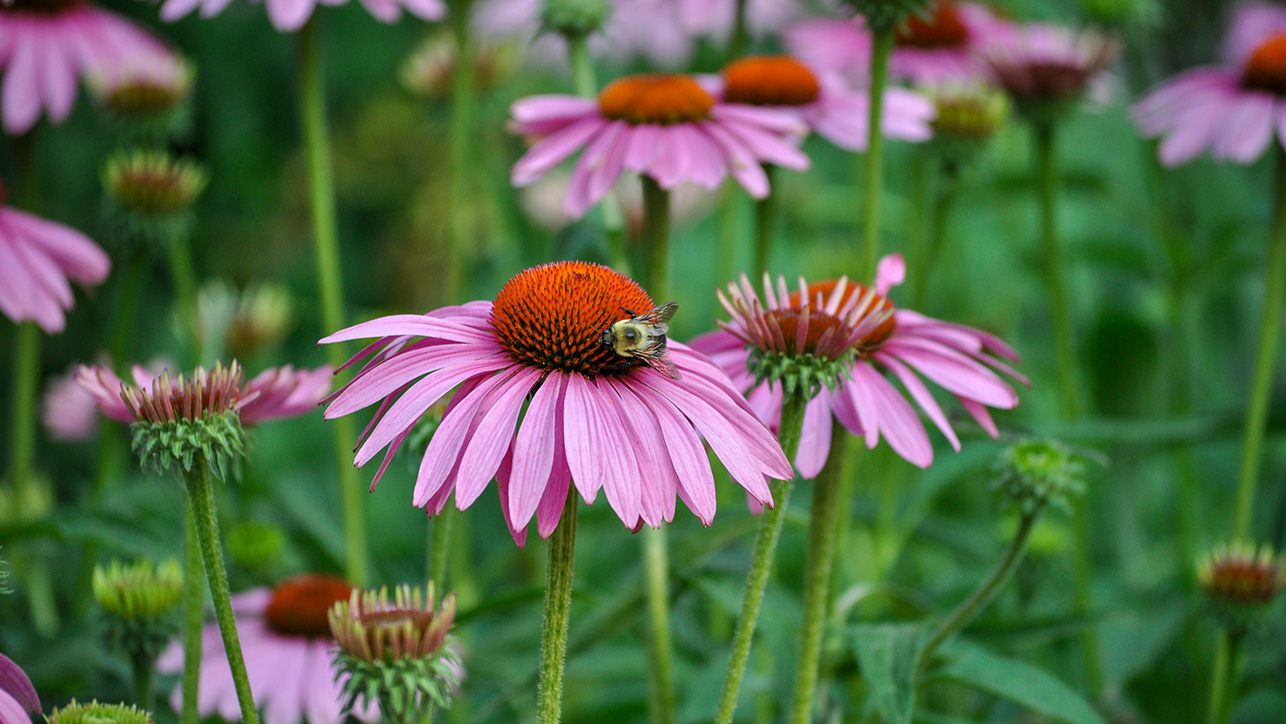
Purple Coneflower

Mountain Mint

Columbine
Did you know that an estimated one-third of all foods and beverages we consume are delivered by pollinators? And that pollination produces nearly $20 billion worth of products annually in the U.S.?
Video Highlights
Enjoy these highlights from our YouTube channel, where you will find more video resources to continue your Gardens learning journey at any time, in any location.
Collaborative Science Projects
Join these collaborative science projects (also called citizen science) to help researchers learn about local pollinators!
Additional Resources
North Carolina Pollinator Alliance
BEE Downtown
Durham Bee City U.S.A.
Chatham Mills “Pollinator Paradise” Garden Links and Info by N.C. Extension Agent Debbie Roos
Pollinator Central at the North Carolina Botanical Garden
Bee ID Guide from the Pollinator Partnership
The Pollinator Partnership
“Attracting Pollinators to Your Garden” (JC Raulston Arboretum)
“Pollinator Plants for the Home Garden” (JC Raulston Arboretum)
“Virtual Garden Tour” (N.C. Cooperative Extension, Chatham County)
Did you know that more than 200,000 species of insects are beneficial pollinators, including flies, beetles, wasps, ants and moths?
…and that about 1,000 species of pollinators are vertebrates such as birds, bats and small mammals?
Questions?
Please contact us at gardens@duke.edu.