
Ten years ago, the Blomquist Piedmont Prairie began as a horticultural display to illustrate how the local landscape could have looked more than 500 years ago. Curator Annabel Renwick reveals how it has become so much more.
Flying into the Raleigh–Durham International Airport, the traveler has a birds-eye view of the North Carolina Piedmont region, a land covered with swathes of pine forest, shimmering lakes, farmland and pockets of urban sprawl connected by a network of roads. Seeing this landscape today, it might be difficult to imagine how it looked 500 years ago, prior to European exploration of this region. What would have been there in 1525? Based on the personal writings of several Europeans, including British explorer John Lawson, who published a diary describing his travels in the Carolinas during the winter of 1700, as well as French and English cartographers who created maps of the region in the early 18th century, it is certain that the Piedmont would have been dominated by grassland rather than trees.

The Piedmont Prairie in History
Grassland ecosystems in the Piedmont region have existed for millennia, largely due to the effects of fire and grazing on the landscape. Fire was both natural, caused by lightning strikes, and anthropogenic, brought about by the Indigenous peoples who lived here. They used controlled burning to manage the land, restrict the growth of forest and invigorate game hunting, as explorer John Lawson observed. The removal of shrubby vegetation permitted the light to reach the ground, allowing the germination and establishment of grass and wildflower seeds that require light. As these seedlings grew into larger plants, they would become fodder for grazing herbivores, which the Indigenous people would hunt. In turn, grazing from larger herbivores such as bison and elk played a significant role in managing the grasslands, controlling woody regrowth and providing natural fertilization.
Many paths and trails, known today as Indian Trading Paths, wound through the landscape, connecting Indigenous villages throughout the Southeastern United States (many of which are now the roads used across the state daily). There would also have been dwellings housing the people who occupied this land before the arrival of the Europeans.
It was along some of these paths that explorer John Lawson traveled on his journey from Charles Town (now Charleston, South Carolina) to the place that is now New Bern, North Carolina, in the winter of 1700. During his travels, he met many people, including Native Americans in the area, whom Lawson described in wonderful detail: their appearance, their agricultural expertise, their use of plants as medicines, the food they hunted, prepared and served, and the landscape and its animals. Lawson mentions walking more than 30 miles across extensive grassland and not seeing a single tree. It is not surprising that at that time these grasslands were referred to as savannas rather than prairies.
Botanists today can support this written historical account with biogeographic evidence, particularly when studying the many sun-loving plants found along roadsides and in old fields, which are the descendants of species that once covered the Piedmont. Unfortunately, many of these plant species and their habitats have been declining since European settlement. Following the forced removal of the Indigenous Nations from the Southeastern U.S. in the early to mid-19th century, and the corresponding reduction in bison and elk populations, the forest returned to the Piedmont, along with European farming practices. Today, these southern prairie ecosystems are rapidly disappearing due to urbanization, agriculture and forestry, with the rarer plants now protected in isolated preserves. For this reason, Duke Gardens decided to build a demonstration prairie in the Blomquist Garden of Native Plants, giving visitors the opportunity to view and connect with this vanishing landscape that once covered an area of approximately 80,000 square miles but is uncommon today.
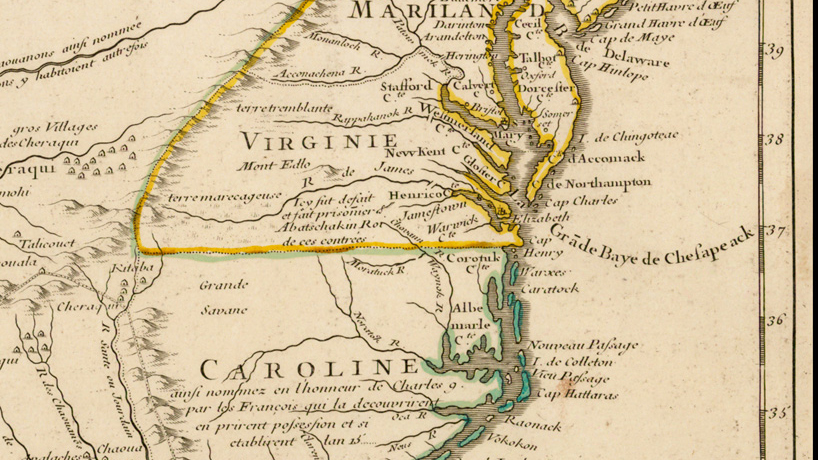
An 18th century French map of the Carolinas, which describes the area where Durham is now located as “Grande Savane.”
Building the Prairie at Duke Gardens
In 2012, Stefan Bloodworth, then curator of the Blomquist, laid the groundwork for creating the Piedmont Prairie at Duke Gardens. Support for this project was given through the generosity of Carol Remmer Angle in honor of her daughter, Marcia Angle, and in 2015, one acre of the Blomquist was converted into a horticultural interpretation of a southern piedmont grassland. As a horticulturist in the Blomquist at the time, I conducted extensive research at the outset of the project, interviewing local experts, visiting remnant prairies in the region, reading books and published articles on the natural piedmont landscape and restored grasslands and more. The goal of this specific project was not to carry bison or even cattle on several hundred acres of native grassland (a different type of project), but to create a botanical display of around one acre, which would be interpreted through signage and educational programs in a botanical garden setting.
To build the prairie, around 40 loblolly and shortleaf pines had to be removed, with the wood from these trees later used to construct the prairie classroom as well as the Fisher Entrance arbor at the southern entrance to the Blomquist Garden. Initially, the removal of these trees was met with concern from the visiting public as well as a number of garden staff members. The Blomquist team had to demonstrate that this landscape would be far more biologically diverse if it were replaced with a piedmont grassland ecosystem, and more culturally representative of the land that was here before the arrival of Europeans. The pinetum, or collection of pine trees, that preceded the prairie was the result of early forest succession following the abandonment of European agricultural practices, which left the soil heavily eroded. Our goal was to restore the landscape to a semblance of what it once was.
Aware of the pressures, we knew it was important to show positive results quickly within the first year, especially since the landscape remained in full view of the public. Sowing native seed directly into the ground would have taken too long to establish. Moreover, it was necessary to focus on weed suppression during this time so that we could easily identify the weeds from prairie plants. We decided to speed up establishment by propagating seed and planting young plants into the landscape. Initially, we considered buying native seed from suppliers. However, some of this seed could have come from more northern climates rather than the Southeastern Piedmont, so we made a major decision to collect our own local seed for this project.
With permission, we collected seeds of more than 100 species of local ecotype wildflowers and grasses from roadsides, fields and preserves within 50 miles of Durham. The grass species were propagated by Hoffman Nursery in Rougemont, N.C., and around 85 wildflower species were grown at Duke Gardens with the help of volunteers. The seeds were stratified in moist vermiculite and placed in a refrigerator at 4 degrees Celsius for eight weeks between January and March to mimic a North Carolinian winter and break seed dormancy. After stratification, the seeds were removed from the refrigerator and spread out over soil in seed trays. Since the seeds need light to germinate, the trays were placed in a hoop house, and the soil was watered as required. Within six weeks, the seeds germinated in the warmth of the hoop house. The young seedlings, depending on their size, were then transplanted into larger pots in May and June. As transplanting is time-consuming, we had several volunteers help us with this work. The plants were left to grow in pots until they were planted outdoors in late July and early August.

With permission, the Blomquist team collected seeds of more than 100 species of local ecotype wildflowers and grasses from roadsides, fields and preserves.
In 2015, around 13,000 young plants were planted on two-thirds of an acre, and during the following two years, an additional 7,000 plants were planted on the remaining third. A planting plan was created for the 2015 planting. The landscape was divided into 12-foot-square quadrants, and around 144 plants were placed in each quadrant. The planting design was based on how plant communities are established in the wild, as different species have different growth behaviors and those growing from rhizomes or stolon often form clumps or colonies. Plants that disperse their seeds at a distance tend to be randomly distributed, while those that disperse locally, such as Penstemon spp., tend to cluster in groups. The goal of our planting design was to make the prairie look natural. This was not a Piet Oudolf-style garden; we were recreating a landscape that existed in this region 500 years ago and would have been managed through burning and grazing.
When the pine trees were removed in 2014, the soil was tested and found to be similar in minerals, organic matter content and nutrients to many of the local soils where we collected the seeds. The main difference was the soil pH. Due to at least 80 years’ worth of pine needles, the soil acidity was very low, much lower than what we encountered on roadsides and preserves. In 2014, the garden area was limed, which brought the soil pH up from pH 4.5 to the natural range of pH 5.3–6.0. The soil has not been limed in the past 10 years, and the soil pH is now close to pH 6.0.


Intentionally planting wildflowers and grasses propagated from local ecotype seed.
Planting took place, with the help of volunteers, over a period of three weeks in the height of summer. Stefan and I came in at 6 a.m. to drill holes using a four-inch auger. Because there was no topsoil at the time, we drilled directly into the clay subsoil, sometimes having to use a pickaxe to break through the soil pan. The landscape was divided into quadrants, with each corner marked with a flag to help guide plant placement according to the planting plan. Volunteers worked from 8 a.m. to 10 a.m. during the cooler part of the day to plant each plant directly into the clay soil. After planting, wood chips from pine trees and branches removed from the area were placed around the plants, and we watered them for about 30 minutes—the only time they were ever irrigated. Within two months, the approximately 20,000 plants were established and looked healthy in the new Blomquist landscape.
In 2016, we constructed an outdoor classroom at the eastern edge of the prairie, designed by Durham architect Ellen Cassilly. It is a stunning piece of architecture that gives the landscape a focal point. Most of the materials used in construction came from trees that had been removed to create the prairie, including pines used for the structure and cherrybark oak used for bench seating. The red cedar at the doorway and trellis came from Duke Forest. The sandstone-paved floor was a 2022 addition created by stonemason Brooks Burleson, thanks to the generosity of Whit Broome, who provided funding for the flooring as well as interpretative signage in memory of his wife, Julia Renegar Broome. The flooring has made the classroom a more accessible space and is frequently used by Duke University classes and community organizations.


Views of the prairie classroom
Ten Years in the Prairie
By their very nature, prairie landscapes must be managed and maintained, as Indigenous peoples have practiced for millennia. During the past 10 years, we’ve managed the Blomquist prairie through fire and mowing to mimic grazing, which are standard management tools for native grasslands (although grazing may be included where possible). We worked with the North Carolina Forest Service to conduct two controlled burns, the first in March 2018 and the second in March 2024. In other years, we mowed the landscape in late winter/early spring. Timing is everything when managing the landscape, especially with controlled burns. Summer burns can control specific trees such as sweet gum, but burning at this time is more difficult than in the winter due to the high humidity and green vegetation. Winter burns are very fast since the vegetation is dry, and generally, these burns do not damage the plants below the soil surface. At Duke Gardens, environmental conditions like wind speed and direction must also be considered because of our proximity to the hospital and university. It is amazing to observe how quickly life starts to appear following a burn; the landscape has the appearance of a barren moonscape immediately after, but within a week, plants emerge from the soil.
For the first few years, between 2016 and 2019, the prairie continued to maintain plant diversity. However, by 2020, it was apparent that a few native plant species were starting to dominate the landscape, some reaching seven to eight feet in height. Instead of the 100 species planted in 2015, we were seeing fewer than 10 different species. In fact, even though 70% of the prairie had originally been planted with native grasses, we could hardly see a native grass.

Controlled burn in the Blomquist Prairie, 2024.
What was causing the changes? As someone who once worked as a research scientist in agriculture, I have experience with grassland management. The type of grazer (sheep, cattle, horse), the timing and the intensity of grazing all impact the nature of a plant community. Our routine management strategy for the prairie—mowing or burning in late winter—led to the dominance of tall, aggressive native plants such as ironweed (Vernonia spp.) and goldenrod (Solidago spp.). These plants frequently overwinter above ground, putting them at a competitive advantage as soon as the warmer temperatures of spring arrive. Many of the native grasses we planted are warm-season grasses, and they don’t start to grow until the soil reaches around 60 degrees Fahrenheit—late April or May in North Carolina. By this time, ironweed and goldenrod can already be two to three feet tall and will easily block light from smaller, slower-growing plants.
To help recover plant diversity in the Blomquist Piedmont Prairie, I introduced a selective mow in late May/early June to reduce the height of more aggressive native plants. Mowing both in late winter and early summer is carried out with a small, light hedge cutter on a pole. The cutting process is very quick, and the affected plant material is left to decay in situ. In addition to giving other plants access to light, thereby inspiring growth, mowing also causes those plants that were reduced in height to produce flowers later in the season on shorter stems. They often bloom into early November, giving insects food for a longer period of time. Within one season, this approach helped revitalize a more diverse plant community, which in turn created a more diverse wildlife community – exactly what we hoped to achieve on this acre when the prairie was established 10 years ago.
Impact of the Prairie on Visitors
The original concept of the prairie project was to create a display for the public to see what a southeastern piedmont ecosystem may have looked like before the arrival of the Europeans. It turned out to have a much larger impact than we had ever imagined.
After installation in 2015, the Blomquist Piedmont Prairie attracted a tremendous amount of attention from landscape architects and designers, landowners, homeowner associations, schools, private corporations, municipal authorities and other public gardens. It was clear that we had brought to the public arena a movement that had been bubbling beneath the surface of landscape design. The concept of creating a prairie landscape was becoming very popular, especially in relation to generating wildlife habitats. There was also a strong desire to restore the sense of place and connection to the Indigenous people who lived and managed this land for centuries, if not millennia, before the Europeans set foot in the Americas.
In 2017, we were approached by Syngenta, a leading agricultural research company based in nearby Research Triangle Park, to help create a native plant garden based on the Blomquist Prairie. Together with Ruppert Landscaping and the Blomquist Team, Syngenta’s garden club volunteers propagated several thousand native plants from seed we gave them. Joshua Richardson at Ruppert Landscaping designed the space, and Ruppert Landscape prepared and planted it. The Syngenta prairie has since garnered acclaim, including an award at the Perennial Plant Association annual conference in 2023.

The Duke Gardens team helped establish a prairie on the Syngenta corporate campus.

The pocket prairie planted in the Duke University parking lot.
In 2019, we decided to create a few experimental plantings in a parking lot median at Duke University Hospital to demonstrate that southeastern native prairie plants can be an attractive, low-maintenance landscape option in public spaces and urban areas and a more environmentally beneficial alternative to sod. We selected plants that would be attractive to people and pollinators, were robust and persistent, short in stature, easy to grow and readily available to purchase. A median in the hospital parking lot is a tough environment for any plant. The soil is usually very poor, the light is usually full sun, and heat is usually more intense thanks to the sea of asphalt, cars and trucks parking over the edges of the medians. Plants must also endure substantial foot traffic and tolerate long periods of drought since rainfall is their own water source. Fortunately, many native plants prefer low-nutrient and poor soil, thrive under hot, sunny conditions and can tolerate long periods of drought. To date, 22 different species and cultivars of grasses and wildflowers have been planted in this parking lot ‘pocket prairie.’ What’s more, as we monitor their robustness and persistence, we have seen many species of pollinators attracted to this spot in an otherwise barren parking lot landscape.

The Duke University Hospital pocket prairie project has led to the development of other pocket prairies in the Triangle, including a native plant garden in central Durham’s Rotary Plaza, which grew out of discussions between Duke Gardens horticulturalists and the City of Durham, as well as landscapes created by the City of Raleigh. Recently, we have supported the work of the Extension Master Gardener Volunteers of Durham County, who have created a pocket prairie at the Stanford L. Warren Branch Library in Durham. This demonstration garden was recognized with an award from the 2025 David Gibby International Master Gardener Search for Excellence at the International Master Gardener Conference.
While our efforts to create prairies across the region continue, we are also aware that prairie landscapes can be visually challenging to some visitors who expect highly cultivated and manicured spaces when entering a botanical garden. The prairie is not this. It is designed to stop people in their tracks and, in many ways, inspire more questions than answers about this wilder space. While many people have turned on their heels and walked out of the garden, many more people have come into the space and embraced the beauty of this natural landscape filled with bees, butterflies and birds. That’s in part due to our efforts to help the public understand and appreciate the landscape. We have carried out many walks and talks, placed informational signage in the landscape (thanks again to the generosity of Whit Broome, whose late wife Julia was passionate about botanical education), and have presented about the project at several conferences. There is no doubt that the prairie has grown in popularity. Visitors flock here during two peak bloom periods in this grassland in May through June and August through October, with the latter remaining the most spectacular. But they also come in the fall and mid-winter after the wildflowers have bloomed, when the prairie has its own beauty, filled with brown hues and alive with birds and other wildlife.
Impact on the Environment
From the outset of the Blomquist Prairie project, we have been guided by the question: how can the reintroduction of native grassland ecosystems help restore habitats and mitigate climate change? Carrying out studies to explore these topics can help advocate for the introduction of more native grasslands.
One of the first major endeavors of the Blomquist project was the collection and propagation of local ecotype seed. Sadly, just 10 years later, some of the places where the seed was collected have been negatively impacted by building projects and changes in land management. We continue to conserve the descendants of these plants as they grow in the Blomquist Prairie as an ex-situ collection.
For the past four years, we have been trapping small flying insects in tent-like malaise traps to monitor the number and type of insect species found throughout Duke Gardens. The trapping is carried out for 48 hours, once a month from March to November. Once collected, the insects are sorted into insect orders and stored in ethanol for more detailed identification at a later time. Malaise traps are set up at three sites in Duke Gardens: the Blomquist Prairie, the Charlotte Brody Discovery Garden and the Culberson Asiatic Arboretum. There is also one additional trap at a preserved remnant prairie 20 miles from Durham. These studies will be used to compare insects from a restored prairie in a botanical garden to those in semi-wild conditions.


In general, grassland ecosystems have better soil structure than soils under regular cultivation. Soil structure is an important measurement of soil health, associated with optimum plant growth as well as healthy, active soil microflora and fauna. Importantly, soil structure also aids in the control of heavy rainfall; soil with a good structure is more permeable to water, which in turn will reduce runoff and soil erosion. There has been an observable, marked change in the appearance of the soil in the Blomquist Prairie over the past 10 years. Experiments are now underway to determine changes in soil structure, water permeability and soil organic matter content compared with neighboring soils that were not turned into prairie. These important measurements, particularly improvement in soil organic matter content, can help assess the uptake of carbon dioxide and its conversion into carbohydrates found in the plant above and below ground, a critical indicator of climate change.
Ten years ago, the Blomquist Piedmont Prairie began as a horticultural display to illustrate how the local landscape could have looked more than 500 years ago. I am proud to say that it has become so much more.

“The original concept of the prairie project was to create a display for the public to see what a southeastern piedmont ecosystem may have looked like before the arrival of the Europeans. It turned out to have a much larger impact than we had ever imagined.”
Dr. Annabel Renwick,
Curator of the Blomquist Garden of Native Plants
Learn more about the Piedmont Prairie and the Blomquist Garden of Native Plants.
Learn More ›
Questions?
Please contact us at gardens@duke.edu.